Thank You for the 1st of May! Today is well known as Labour Day, but in France today isn’t just Labor Day – it’s also a day filled with fragrant white bells and heartfelt wishes.
Today we are celebrating La Fête du Muguet, or Lily of the Valley Day, by offering small bouquets of these delicate flowers to friends, family, and loved ones.
Since 1561, after King Charles IX received a small bouquet of lilies of the valley as a token of good fortune, he decreed that every year on May 1st this flower should be given to the ladies of his court.
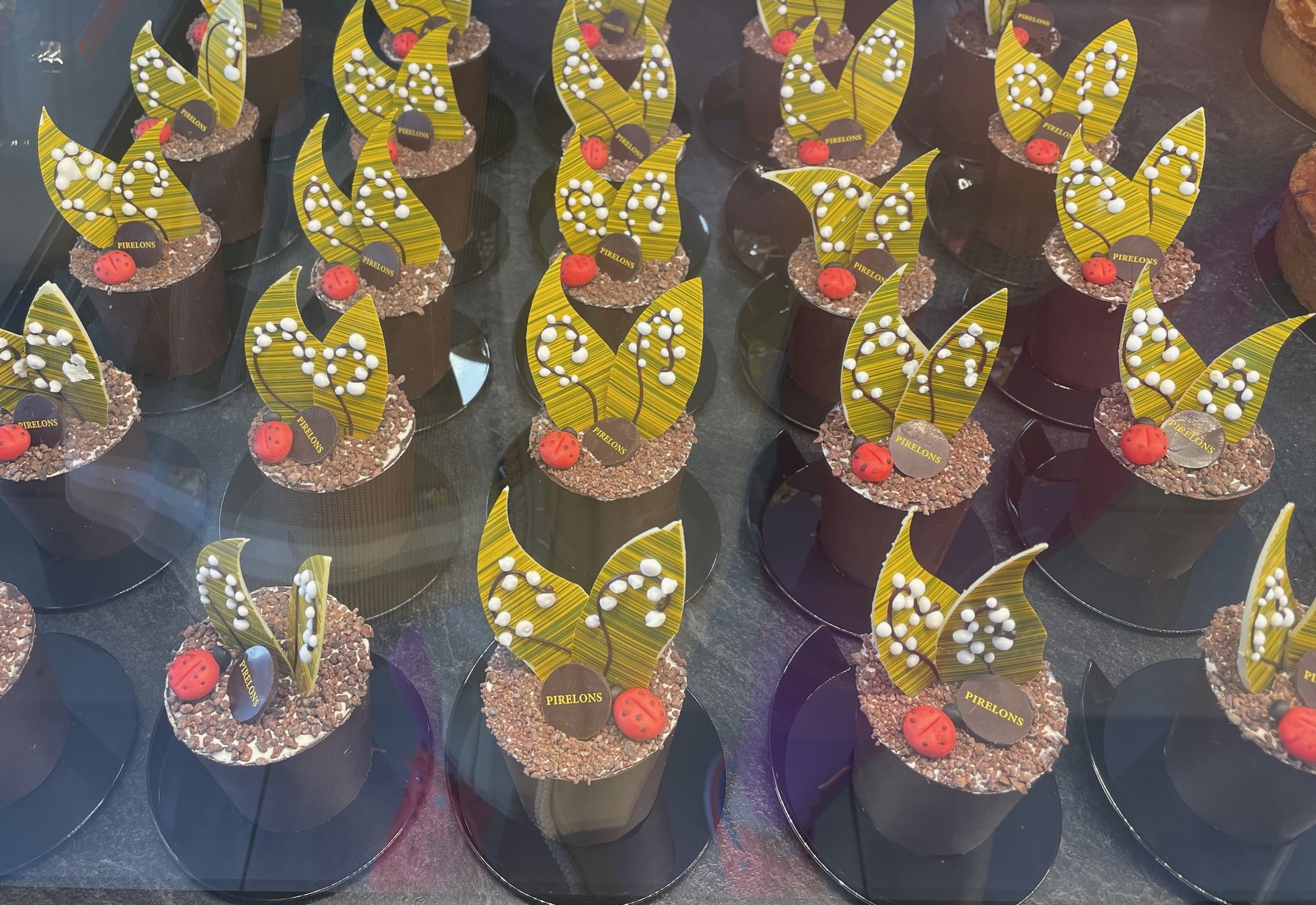
Not only florists are overflowing our streets with the bouquets of pure happiness – I have found the boulangerie with wonderful cakes with white drops of chocolate on the waffles leaves. Oh, this is delicious!
So take this bloom with heart sincere,
A charm for luck through all the year.
Let every petal gently say:
“I wish you happiness today.”
With this delicate piano music, with this precious 4 minutes of purity and tenderness, with the sweetness of white chocolate and a glass of champagne I wish you Beauty and Light in every smiles you will meet today.
Thank You for your smiling eyes, please, no crying, I am going too, because of this overwhelming Beauty. I Love You! I Thank You! Endlessly.
Thank You for the inspirational Pacific Ocean Wind in my head.
A new week should begin from a very good mood. It is guaranteed by the American hearty breakfast. Oh, there is the butter sur hot waffles, it smells so goood! Bon appetite!
Full of energy I am in hurry to meet the Ocean,
This meeting is blessing of the sky.
What I am feeling the first is the Ocean Wind,
I invite him to my head.
The boundless Pacific Ocean is meeting
And hugging me and I am floating in the Wholeness,
Which can create the worlds,
I am created, realized because of It and Absolute.
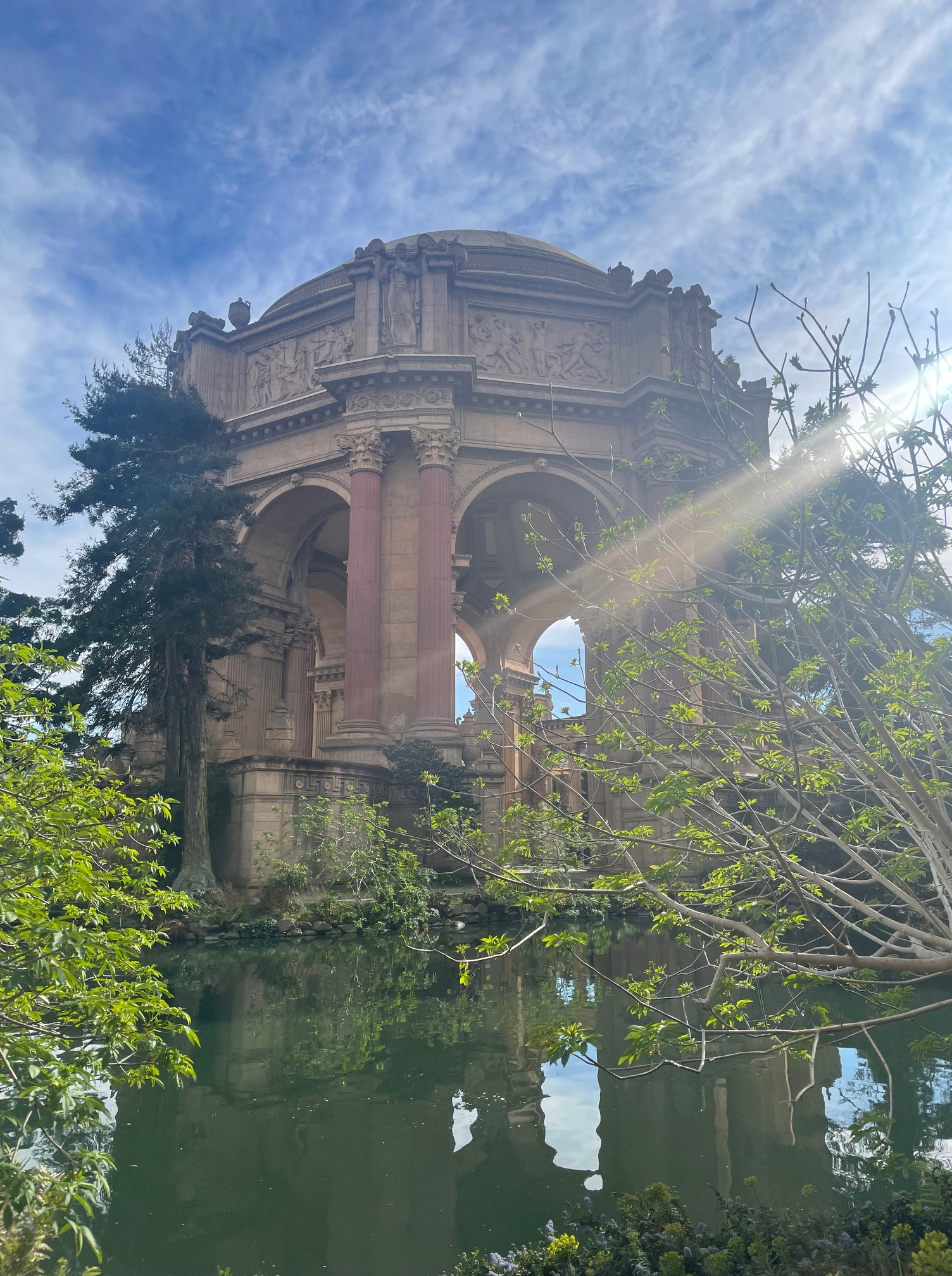
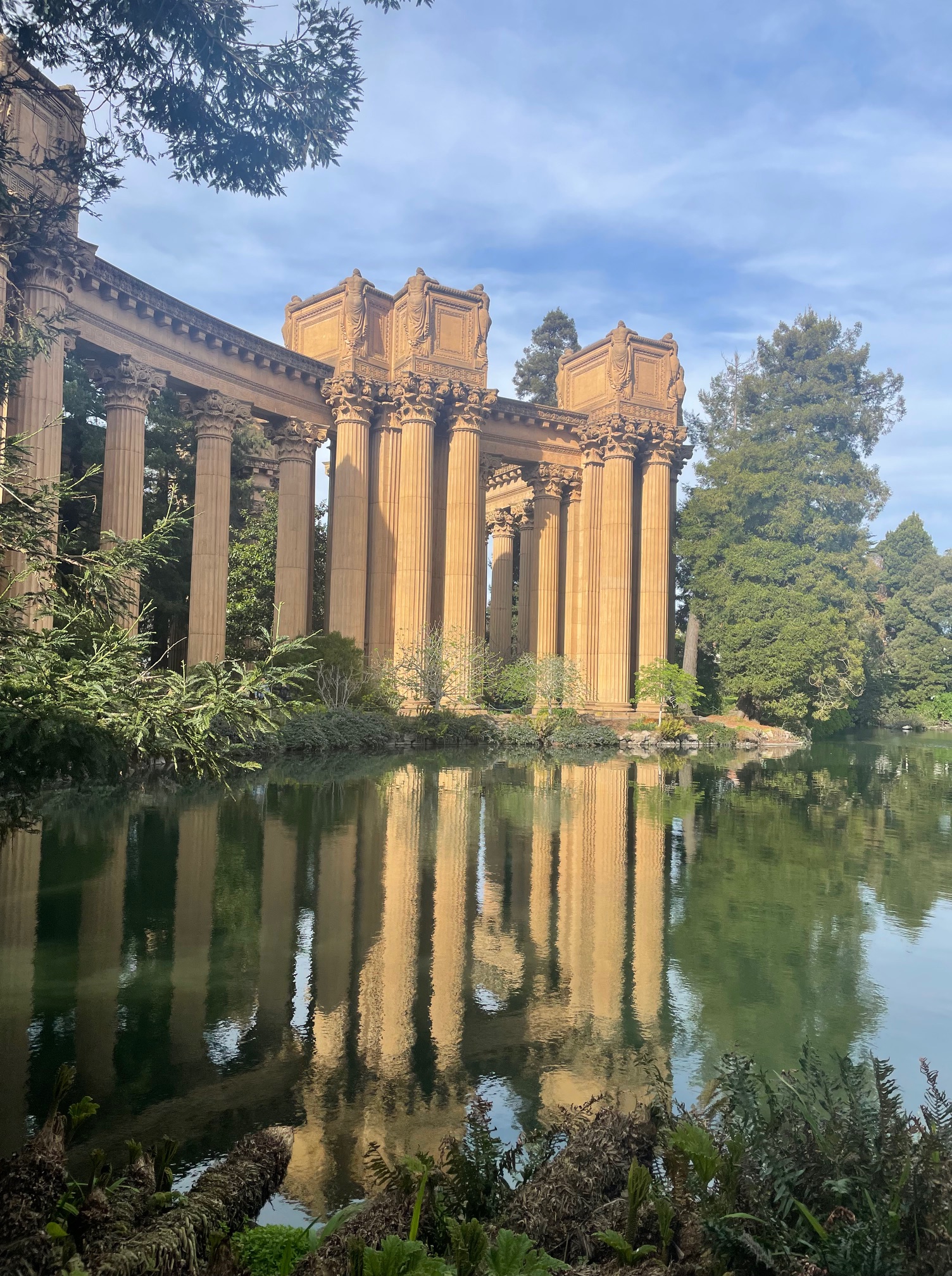
Thank You for the Piano Sonata No. 14 in C-sharp minor, Op. 27, No. 2 known as “Moonlight Sonata”. I invite you to enjoy the piano music of Beethoven in the Palace of Fine Arts in San Francisco. What’s the magic place with the magic music!
The Sonata consists three movements.
The first is Adagio sostenuto. It means the music should be played slowly and with a sustained, smooth feeling almost like the notes are gently floating or lingering in the air. The arpeggios create that haunting, dreamy and hypnotic atmosphere that makes the first movement so unforgettable.
The second is Allegretto. It carries a playful, graceful, or cheerful mood—not as intense as allegro, but still lively.
We live a moment of lightness, we dance a menuet in triple time—a kind of gentle dance of breath of fresh air.
The stormy final movement is Presto Agitato. It means the music should be played extremely fast, with intense energy and emotional agitation.
Many fast arpeggios, broken chords, strongly accented notes creates “the most unbridled in its representation of emotion. Even today, two hundred two hundred years later, its ferocity is astonishing” – said American pianist Charles Rosen.
Thank You for my glass of excellent red wine from Saint-Émilion, Bordeux region, France. Sitting at the table with wonderful French cheese Roquefort, of course, this Saturday’s night is going to be warm and happy.
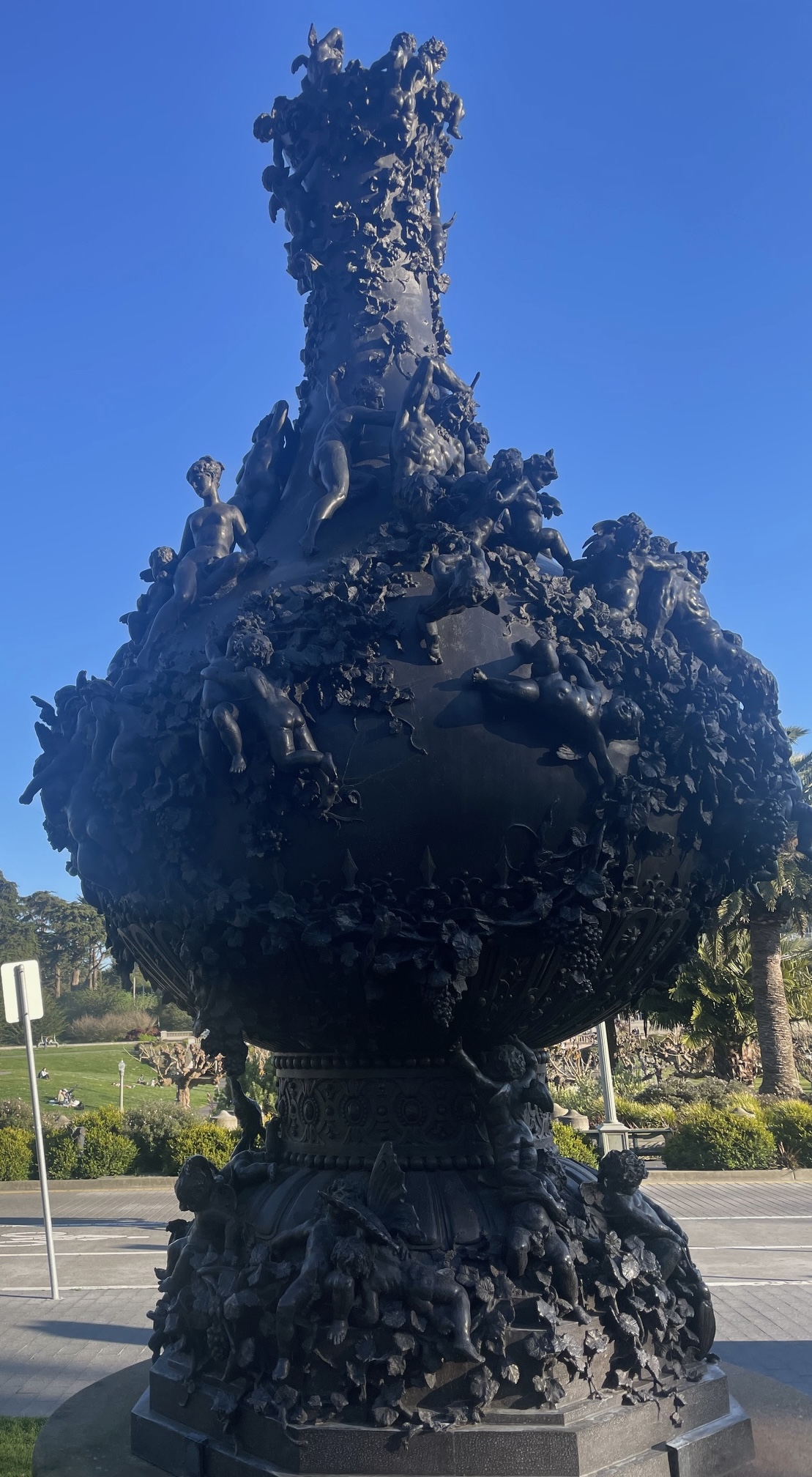
This sculpture “The Vintage Vase” is situated near the museum de Young, San Francisco. But It’s original name is “Le Poème de la Vigne” in French, “The poem of vine” in English. Let’s full our glasses and I will tell you a story.
This story began a lot of yours ago.
Prosperous Bordolais, which means from Bordeaux region, was the Grand Cru wine-maker, and he decided to participated in the 1878 Paris World’s Fair for presenting his job of life – the finest Grand Cru wine. He was lucky, because one of his friend was Gustave Doré .
“Gustave, mon cher ami, my dear friend, I know you are talented artist, help me to create my symbol of Grand Cru wine, I dedicated all my life.”
“For my inspiration I need to taste your best wine”, replayed the sculptor.
“Bien sûr, of course, please try my wine”.
With the first sip the brain of Gustave exploded in harmonious accord of the divine pleasure. And Bacchanalia of inspiration, pleasure, love and joy transformed in the sculpture of the shape of a colossal wine vessel decorated with figures associated with the rites of Dionysus, known as Bacchus – the Roman god of wine.
58 Cupids, 7 Bacchantes, or maenads, female followers of Bacchus, 4 Satyrs, 1 Silenus – a companion and tutor of Bacchus, and an assortment of the vine’s enemies: including insects, rodents, and reptiles are glorifying the god Dionysus.
Covering by red velvet, weighting three tonnes sculpture was presented to the wine-maker.
“Mon cher ami, the sculpture is ready! Close your eyes and I will show the symbol of your Wine”, said Gustav.
Red velvet fallen and the Bordolais saw the vessel. “Yes, indeed, it exactly what I do for all my life. I am glorifying the god Dionysus!”, he said crying because there were no words to describe this beauty.
The vase had its own destiny. After Paris Fair, San Franciscan Michael de Young saw the vase in Chicago, fell in love with it, than purchased the vase and later donated it to the de Young Museum.
Cheers, my dear friends! Let’s celebrate this moment and our life!
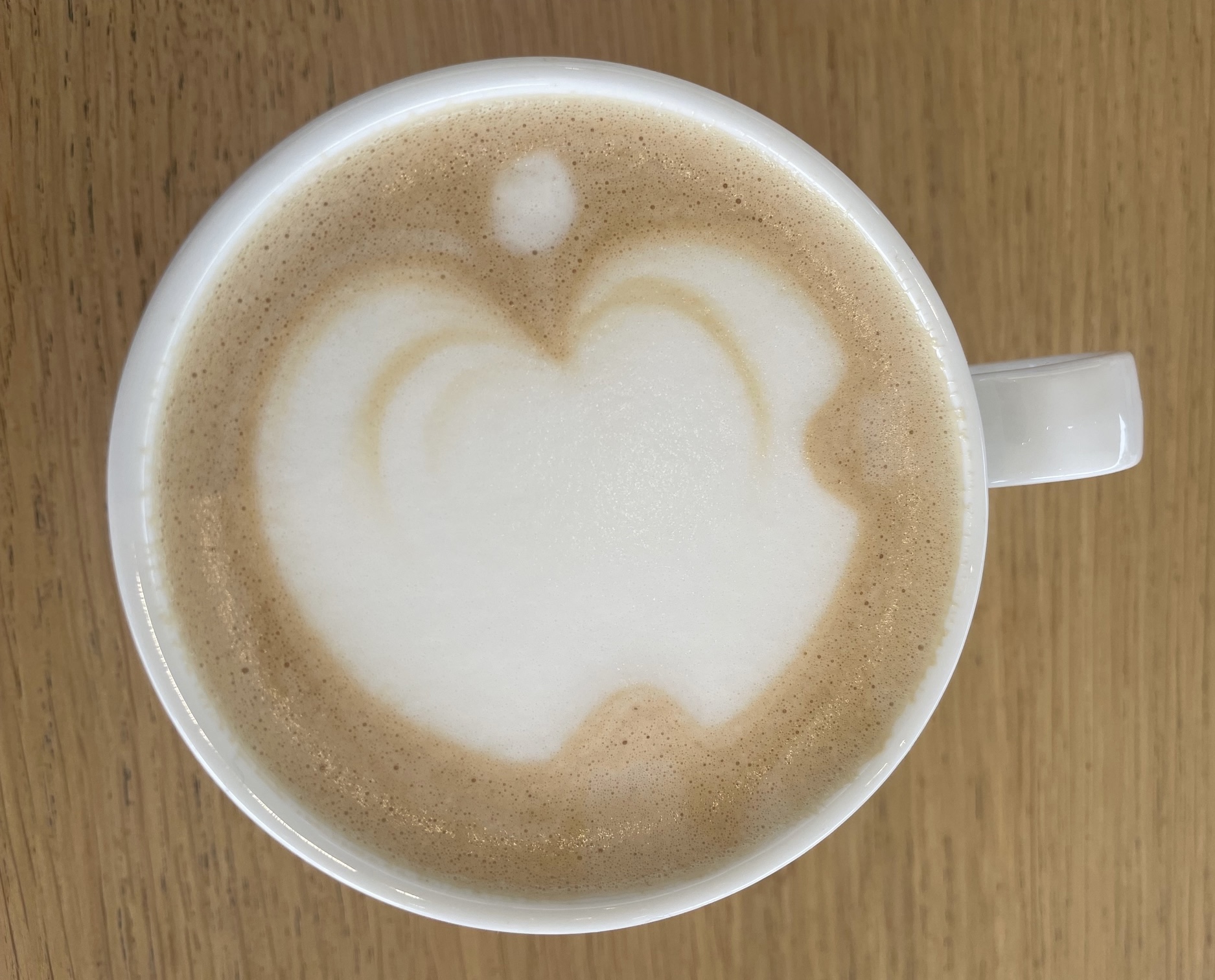
“The powers of a man’s mind are directly proportioned to the quantity of coffee he drinks.” — said James Mackintosh. I suppose that people in Apple.com drink a lot of coffee.
A lot of inspiration flies in the atmosphere,
I am trying to catch a muse in the steamed milk,
With the symbol of creating worlds on the top,
Apple makes to sing a song of AirPods.
Your smile is precious, I am creating for,
My muse is catched, she is inside,
And butterflies and blowing almond trees,
In harmony of Spring dance.
I am grateful for this possibility to share my cappuccino with you! Have a good day!
Thank You for Spring! With singing birds as my alarm clock and fresh aroma of coffee as my first inspiration, morning is beginning a new happy day.
Everything beautiful in our life was born in love, passion and grace. Spring brings to us these great gifts. Today I invite you in Bergamo in a sunny terrace of charming cafe “La Marianna” to share with me fantastic desert – Polenta e Osèi, the gastronomic symbol of Bergamo.
Originally, polenta, from the Latin pollen for “fine flour”, which shares a root with pulvis, meaning “dust”, is a dish of boiled cornmeal. It’s frequently eaten with meats and ragù, cheese like gorgonzola.
The origins of the sweet version of Polenta e Osèi date to 1910, the year when a local baker, Amadeo Alessio and his wife, created it for the first time.
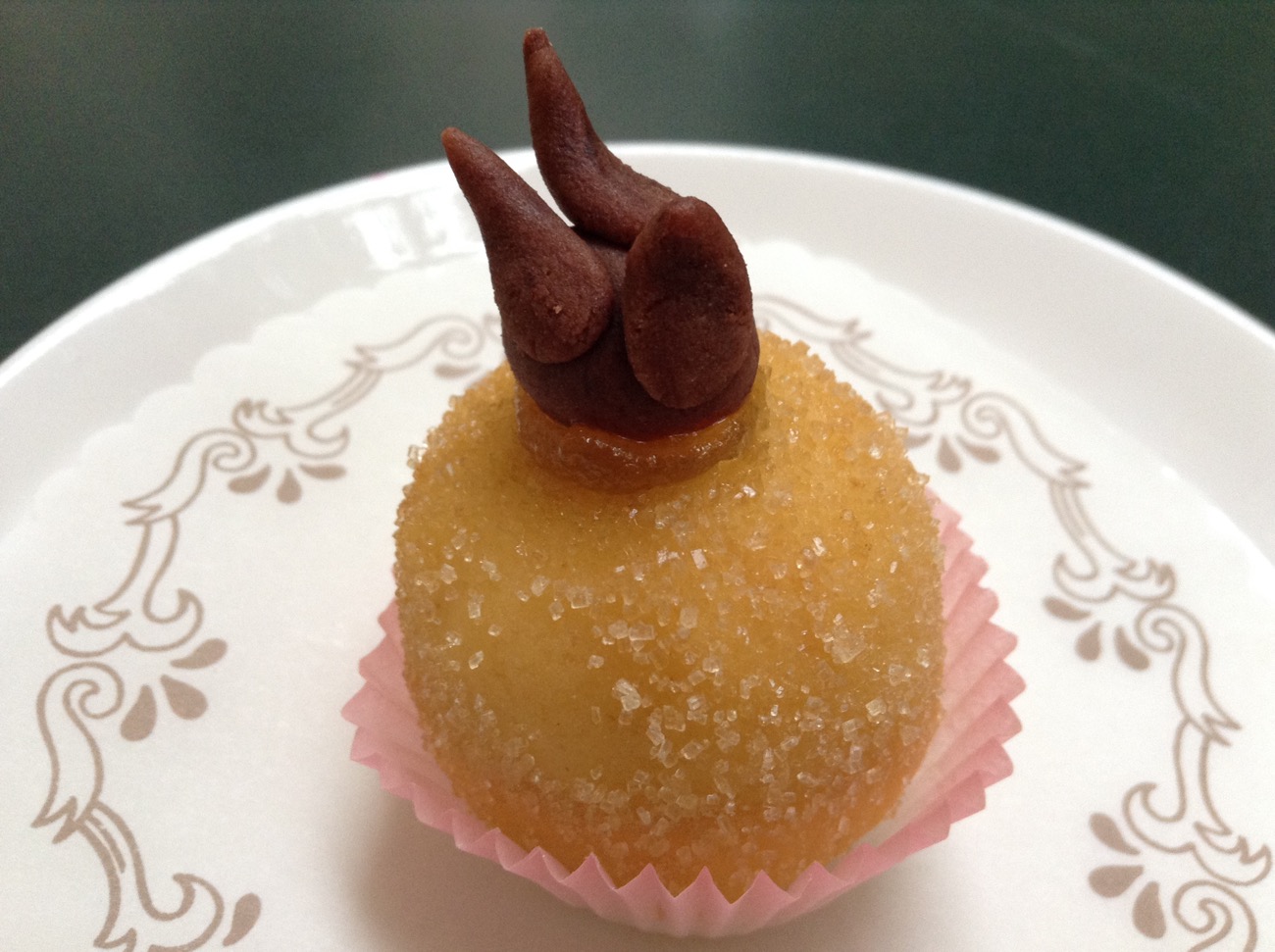
It is interesting that Polenta e Osèi is in no way actually made of polenta. The polenta-like appearance is due to a yellow fondant covering rolled in big crystals of sugar, with a dollop of apricot jam on top. Inside, a yellow cake (pan di spagna) hides a cream center of usually hazelnut.
It seems I know the reason why Polenta e Osèi is not actually Polenta…
Amadeo Mozartti is a young and joyful baker from peasant family with happy songs creates his masterpieces in Antonio Salierri’s pastry. Salierri’s business is a heritage from 7 generations of excellent bakers. And from his first inhalation Antonio is a baker and he has dedicated himself to the service of the baking art. He is rich and he enjoys his life in baking cakes in own pastry.
He is proud of his high standards. Of course, the Queen personally byes sophisticated cakes here, in Salerri! But it is the question here. The Queen loves Mozartti’s deserts. Secretly, however, Salleri is jealous of Mozartti’s works because he recognizes their superior quality, especially given what he sees in him as a simple peasant.
Soprano’s family is the richest in Verona. Father of Sopranos is going to Bergamo to expand their business and the best way to do it is … family-arranged wedding! He has a daughter Giulietta Soprano. The only child, she is a gift from heaven.
“Sallieri is a good choice for my Giulietta”, thinks Soprano. “He is rich. He has connection with the Queen”. “Oh, yes, I will marry. Sopranos is my chance!”, Sallierri dreams. Of course, his interest in her is primarily based on her social standing and her family’s vast wealth, in contrast to her youthful beauty.
The meeting Giulietta Soprano with Antonio Sallierri was arranged in Antonio’s pastry. Amadeo Mozartti secretly glanced on Giulietta is fallen in love with her endlessly at the first sight. He can not handle the feeling but what he can do? How he can tell her “I love you!”?
Happy loving hands of grandmother Amadeo feels on his hot forehead and the only world “Polenta” he listens in the dreams at the night before the day when meeting with Giulietta is possible. “Polenta? It sounds ridiculous. This dish is for poor peasants”, Amadeo desperately cries, “I will try any way. It is matter of life or death. I will chose the finest ingredients for my wordless love confession”.
He runs to the kitchen: “White chocolate, dark chocolate, butter, of course, ground almonds, instead of corns! What a relief!” Amadeo happily singing again creates his masterpiece.
“Marzipan bird is on the apricot confiture pillow happily resting in the golden nest not from a metal but from sunshine and my favourite corn. Dear Giulietta, you are the bird and my love is the golden nest. I will keep it for the end of my days,” Giulietta recognised Amadeo’s heart and read the message from it.
Sallieri did not poison Mozartti. Amadeo was simply fired. Father Soprano accepted the choice of his child’s heart. All Bergamo was dancing on their wedding. Happy End!
We can join celebrating Spring and Love with a beautiful dance “La Bergamesca” by Marco Uccellini.
Thank you for your hand I am feeling in the dance by beating of our hearts. Your eyes are incredible. You are beautiful. You are my Spring Bird!












 Glorialana Magazine